
The Sheet of Paper That's Killing America's Prisoners
While regulators take one step, underground chemists sprint ten.
Opening
Dear reader, I was chatting with a friend recently who wondered aloud why the US takes drugs so seriously and keeps pushing China on fentanyl regulation. (We were probably talking about tariffs at the time.) This friend’s only exposure to drugs had been marijuana, Breaking Bad, and the occasional news headline. But another person at the table had actually seen people in California addicted to fentanyl and synthetic drugs firsthand, and the gap in how the two of them reacted to the issue was enormous. So I decided to look into it myself. What on earth is happening in the world of drugs?
In January 2023, an inmate was found dead at Cook County Jail in Chicago. There were no signs of foul play — just a scrap of burnt paper on the floor. Investigators couldn’t pin down the cause of death at first. Over the following months, more inmates at the same jail began collapsing in a pattern. The culprit was neither heroin nor fentanyl. The only thing every death scene had in common was a piece of paper.
Letters, legal documents, books — ordinary-looking paper had been soaked in synthetic drugs, and inmates were tearing off pieces to smoke. At least 7 people died over 18 months. This might read like a crime story out of an American prison, but it’s actually a signal of something far more structural: synthetic chemistry is rewriting the fundamental rules of the illegal drug market, and existing enforcement systems simply can’t keep up.
The ‘Paper Era’ of Synthetic Drugs: What’s Actually Happening
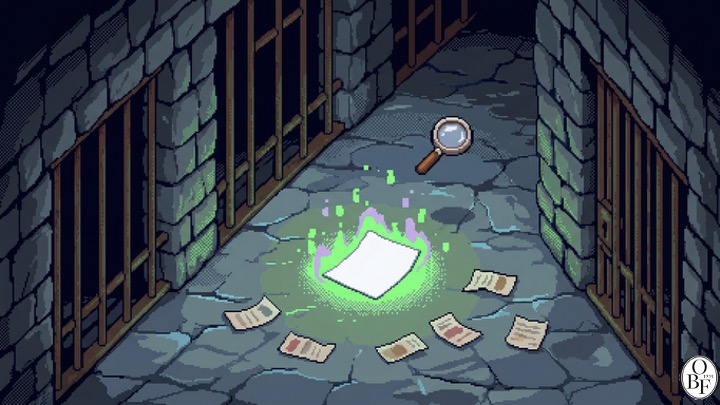
Justin Wilkes, chief investigator at Cook County Jail, uncovered something startling while probing the case: a single sheet of paper had been laced with 10 different synthetic drugs. Opioids, sedatives, synthetic cannabinoids1, hallucinogens, and stimulants were all mixed together on one page. Forensic pathologist Christopher Pardoni called it an extreme concentration of everything dangerous about the new generation of synthetic drugs.
Inside the jail, a driver’s-license-sized scrap of this paper sold for $800 (~₩1.1 million), while a full A4 sheet went for as much as $10,000 (~₩13.7 million). Outside, synthetic drugs are far cheaper than traditional ones — but inside the closed market of a prison, the difficulty of smuggling and the desperation of demand send prices through the roof.
And this isn’t just a Cook County problem. According to a New York Times analysis, arrests or indictments for smuggling drug-laced paper into prisons have occurred in more than 15 US states. In Texas, roughly 190 inmates died from drug-related causes between 2020 and July 2025, with synthetic cannabinoids identified as a cause or contributing factor in 110 of those cases. At Nevada prisons, 127 inmates were hospitalized for overdoses in 2025 alone — already surpassing the entire previous year’s total of 59.
The most troubling part is how hard these drugs are to detect. Drug-sniffing dogs can’t smell them, and there’s no field test kit that works. Sending confiscated paper to a specialized lab for analysis takes 5 to 6 weeks — and by then, a new variant has already emerged.
Related issues
🔒 What Is an AI Harness? The Secret Behind 100x Productivity
The Claude Code leak settled it: the gap between AI users comes not from intelligence, but from the shell wrapped around the model.
🔒 Krafton Did What ChatGPT Said. The Court Reversed It All.
The CEO who let ChatGPT make the call ended up owing not ₩325 billion (~$250M) — but trust.
🔒 Italy's New Law: Paid Leave When Your Pet Is Sick
Italy just made pet sick leave a legal right — and Korea's numbers suggest it might not be far behind.
Your take shapes the next issue
Reply with your experience or perspective — the best responses feed into future issues.
Sign in to commentAny registered reader can comment — it takes 10 seconds.