
Amazon's Globalstar Deal: From Cables to Satellites
Control over global telecom infrastructure is shifting from carriers to Big Tech.
Opening
Hello, dear reader. On April 14, Amazon announced it would acquire satellite communications company Globalstar for about $11.6 billion — $90 a share, a 23.5% premium over the previous closing price. But the acquisition price isn’t what caught my attention.
One line in the press release jumped out at me: “Amazon and Apple have agreed that Amazon LEO1 will handle satellite communication services for the iPhone and Apple Watch.”
This isn’t a simple satellite company acquisition. To understand what’s really going on here, we first need to dive under the ocean.
🌊 The Path for 99% of the World’s Data: Subsea Cables
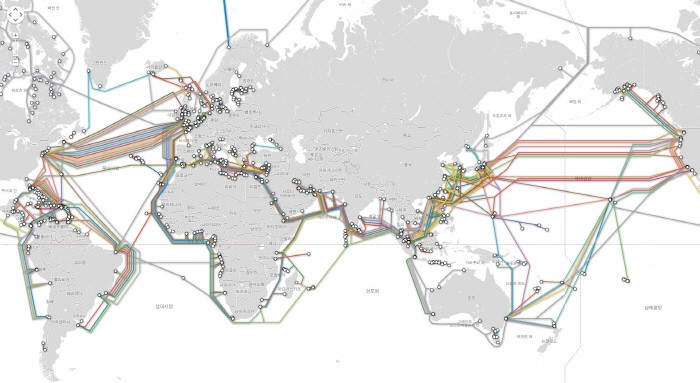
About 99% of the emails, video calls, and financial transactions we exchange every day travel through undersea fiber-optic cables — not satellites. Roughly 570 fiber-optic cables laid beneath the world’s oceans connect continent to continent, carrying an estimated $10 trillion in financial transactions every single day.
The problem is that ownership of these cables is changing hands.
As recently as 2012, Google, Meta, Amazon, and Microsoft together used less than 10% of total subsea cable capacity. Today that figure is about 66%. These four companies now own or hold stakes in more than 60 subsea cables. Google alone has invested in 33 cables, and this year Meta is spending $10 billion to build a 50,000km cable called “Project Waterworth.”
Subsea cables used to be built through consortia — national telecom carriers pooling investment and sharing capacity, a kind of “public highway.” Now, Big Tech companies are building their own private roads instead. The companies that make the content now also own the pipes that carry it.
If I had to sum up what this shift means in one line: the physical foundation of the internet is moving from public infrastructure to private corporate assets.
Related issues
🔒 Smell, the Last Sense AI Still Lacks
Intelligence isn't just in the head — truly embodied AI still doesn't have a nose.
🔒 An AI Ran a Store—and Paid Women Less
When you hand a decision over to a machine, who ends up owning the bias inside it?
🔒 Hancom's PDF Tool Hits #1 on GitHub Trending
35 years of document know-how just got cashed into global currency for the first time.
Your take shapes the next issue
Reply with your experience or perspective — the best responses feed into future issues.
Sign in to commentAny registered reader can comment — it takes 10 seconds.