
The Wuxia Cult That Traces Back to Middle East Oil
A 3rd-century Persian faith became wuxia fiction's Cult of Light — and that same flame ignited the 20th-century oil industry
Opening
Subscriber, do you enjoy wuxia novels? I’m the type who devours everything — classic wuxia, time-loop reincarnation stories, fusion wuxia, wuxia webtoons, all of it. Read enough of them, and one faction keeps showing up without fail: the “Cult of Evil” (魔教, mojiao). They call themselves the “Cult of Light” (明教, mingjiao), but the martial world and the Central Plains brand them mojiao — a sinister group said to worship evil. Of course, now that the picaresque format is trending, plenty of protagonists hail from the cult these days, often portrayed along the lines of “even the cult of evil is just people trying to get by.”

I’m getting a little ahead of myself, but trace the roots of this Cult of Light and you find an astonishing chain of connections — through an ancient Persian religion, all the way to the birth of the 20th-century oil industry. Today’s story is about how religion, fiction, and geopolitics twist together into a single thread.
🔥 The Real Identity of Mingjiao — Manichaeism and Zoroastrianism
If you’re a wuxia fan, you probably picture the Mingjiao from Jin Yong (Louis Cha)‘s The Heaven Sword and Dragon Saber. Based at Guangming Peak (“Bright Summit”), this Mingjiao wields fire- and light-based martial arts like the “Sacred Flame Order” techniques and the “Great Shift of the Universe,” and is depicted as a religion transmitted from Persia.
This setting is grounded in real history. The historical prototype for Mingjiao is Manichaeism (摩尼教)1 — a religion founded in 3rd-century Persia by the prophet Mani. Here’s an important nuance: many people assume the archetype of the “cult of evil” is Zoroastrianism, the “fire-worshipping religion,” but strictly speaking, Manichaeism and Zoroastrianism are two distinct religions.
That said, Manichaeism borrowed Zoroastrianism’s core worldview — the dualistic2 struggle between light (good) and darkness (evil). The reverence for fire and the pursuit of light’s ultimate victory were also lifted from Zoroastrianism. When Manichaeism reached China during the Tang dynasty, it took on the name Mingjiao (明教), meaning “Religion of Light.” By the Song dynasty, it had merged with folk rebel movements like the White Lotus Society3 and drawn suppression from the imperial court. The “Religion of Light” ended up branded the “Demonic Religion” (魔教) — essentially a smear the ruling class stuck on a subversive movement.
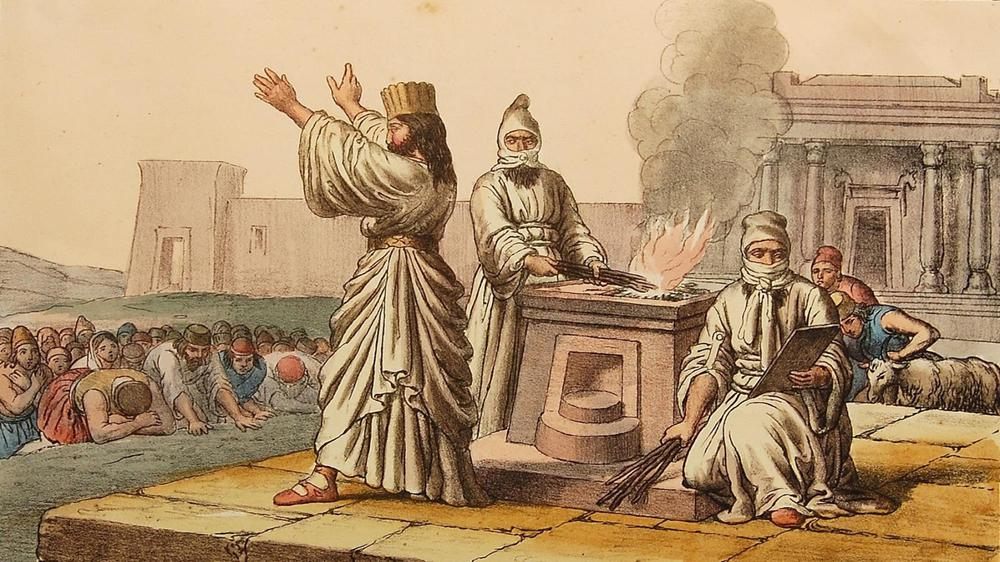
So here’s the through-line: Zoroastrianism (fire worship) built a worldview centered on fire and light; Manichaeism borrowed it and completed the narrative of light struggling against darkness; Manichaeism traveled the Silk Road4 into Tang-dynasty China and became Mingjiao; and the Chinese novelist Jin Yong wove it into wuxia fiction. This lineage is exactly why wuxia novels depict the cult’s martial arts as wielding an unquenchable flame.
Interestingly, there’s even a theory that the name of the Ming dynasty (明朝) itself derives from Mingjiao. The historian Wu Han first raised this connection academically in his 1941 paper “Mingjiao and the Great Ming Empire,” noting that Zhu Yuanzhang — founder of the Ming dynasty, posthumously known as the Hongwu Emperor — rose from the ranks of White Lotus/Mingjiao-affiliated rebels. Once he became emperor, though, he banned Mingjiao outright in 1370. A dynasty named after the very religion its founder later suppressed — that’s one of history’s ironies.
Related issues
🔒 Meta's $6M Verdict Just Gave PMs a New Job
It's not the $6 million verdict that matters — it's the 30-year-old legal shield that just cracked.
🔒 Your Book Taste Reveals Your Personality
Your book preferences quietly map your personality — the same logic that powers Netflix's recommendation engine.
🔒 The Compliance Startup That Broke Compliance
YC's expulsion of Delve exposes cracks in open-source ethics and startup trust networks.
Your take shapes the next issue
Reply with your experience or perspective — the best responses feed into future issues.
Sign in to commentAny registered reader can comment — it takes 10 seconds.