
Adobe Paid $75M Over Dark Pattern Subscription Traps
If signing up takes one click but canceling takes six, that's not UX — that's a trap.
Opening
Dear reader, how long has it taken you to cancel a piece of software?
On March 13, Adobe agreed to pay the U.S. Department of Justice (DOJ) $75 million (~₩105 billion) and provide $75 million worth of free services to affected customers to settle a lawsuit. The total package comes to $150 million. Adobe — the company behind Creative Cloud, the de facto industry standard bundling Photoshop, Illustrator, and Premiere Pro — was fined for making subscription cancellation deliberately difficult.
But what caught my eye wasn’t the case itself — it was one detail. A statement from an Adobe executive, surfaced during litigation. Talking about the early-termination penalty, he reportedly called it “heroin for Adobe.” This isn’t a UI mistake. It’s designed intent. Today, let’s use this case to look at a structure we all encounter daily but rarely notice: the “dark pattern.”
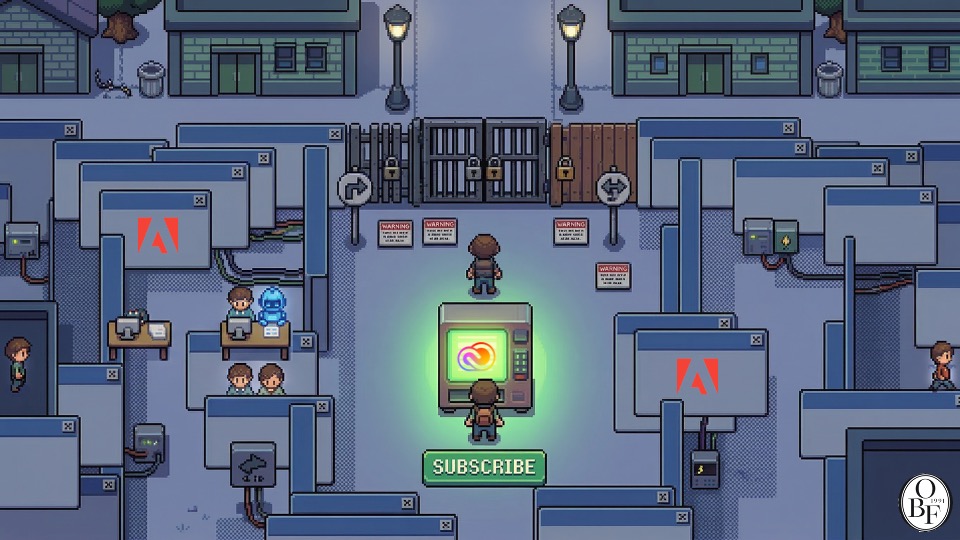
What Happened — Adobe’s “Annual, Paid Monthly” Trap
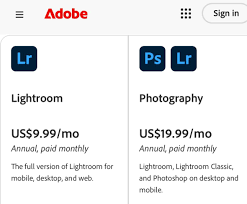
Among Adobe’s Creative Cloud plans is one called “Annual, Paid Monthly.” Judging by the name alone, it sounds like a plan you pay for month to month. In reality, it’s a one-year commitment. Cancel early, and you owe a penalty equal to 50% of the remaining contract value — a sum that can run into the hundreds of dollars. In June 2024, the DOJ and the Federal Trade Commission (FTC) sued Adobe. The core allegations came in three parts.
First, Adobe concealed key terms at sign-up. The one-year commitment and the early-cancellation penalty were buried in small print or behind hyperlinks. Second, Adobe deliberately complicated the cancellation process. Canceling online required navigating multiple pages; canceling by phone meant repeating the same request to multiple representatives. Third, customers only learned a penalty existed the moment they tried to cancel. The DOJ described this as customers being “ambushed.”
Adobe’s fiscal 2025 revenue was $21.5 billion. The $75 million settlement amounts to roughly 0.35% of annual revenue — proportionally, about the equivalent of a single speeding ticket relative to an average Korean office worker’s salary. But this case matters not because of the dollar amount, but because of the precedent it sets.
Related issues
🔒 How a Memory-Saving Algorithm Tanked Memory Stocks
Google's TurboQuant compression algorithm rattled memory stocks Wednesday — but what actually got shaken?
🔒 OpenAI's Five-Punch Day Reveals Its Real Strategy Shift
Sora didn't fail — OpenAI abandoned it on purpose.
🔒 NVIDIA GTC 2026: The Blueprint, Not the Chips
One trillion dollars in order visibility, a $20 billion acquisition paying off, and the 'token factory' business model
Your take shapes the next issue
Reply with your experience or perspective — the best responses feed into future issues.
Sign in to commentAny registered reader can comment — it takes 10 seconds.