
In the AI Era, Cultivate Taste, Not Skills
Technology creates dependence, but taste becomes an asset nothing can replace.

Opening
Dear subscriber, lately, when I give lectures, I keep having the same curious experience. College students, teenagers, junior employees, executives — people of different ages and ranks ask, with surprising consistency, the same question.
“Artificial intelligence can do so much now. So what are we supposed to do?”
Most answers to that question also sound alike: “Go back to the basics.” “Learn how to use AI tools well.” That is not wrong. But I do not think it is the answer. It is too obvious, and it will not hold up for long.
Today I want to talk about the one thing I believe is the real answer: aesthetic judgment, or taste.
If You Chase Technology, You Become Subordinate to It
The range of things AI can do is expanding exponentially. At first, it could write passably well. Then it could make images. Then video. Now it can produce outputs that look more real than reality. It was only two years ago that a ridiculous AI video of Will Smith eating spaghetti became a viral curiosity. Today, AI can make videos more cinematic than films.
In that context, the advice to “learn how to use AI well” is, in a sense, too obvious. Every time a new model appears, every time a new tool is updated, you have to learn a new way of working. When Midjourney versions 7, 8, and 9 arrive, you have to relearn prompting methodology. When a new coding agent comes out, you have to adapt to yet another workflow.
In the end, that is a structure of dependence on technology. It is not that I am using the technology; the technology is dragging me along.
So What Should We Cultivate?
I think the answer is one thing: taste. The ability to recognize what is good, and the ability to choose it and explain why.
The important point here is the language we use. Look at the verbs we attach to taste.
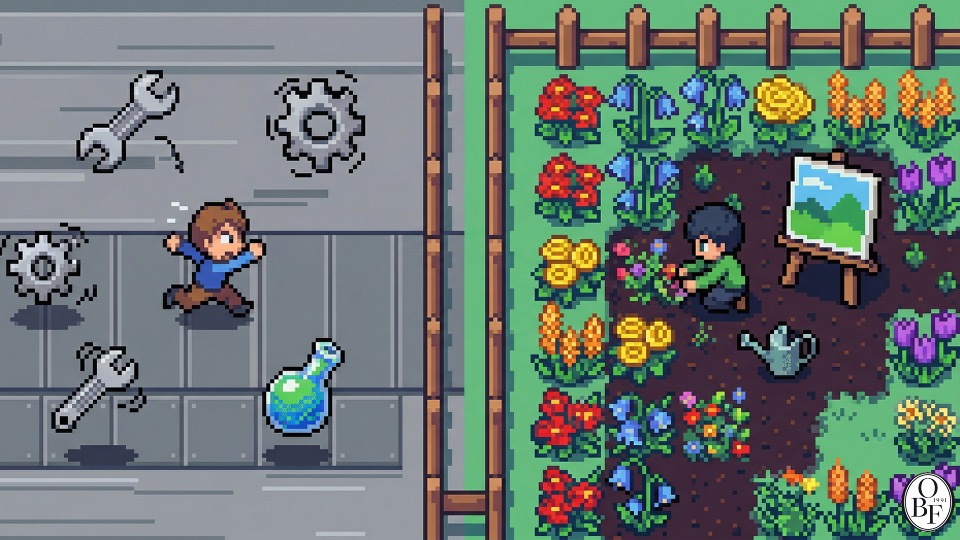
We say taste is something you “cultivate,” not something you “learn.” A way of speaking is something you “acquire.” A point of view is something you “cultivate”; consistency is something you “maintain.” What do these expressions have in common? They all require the resource of time. They are not things you finish after taking a class once. They grow slowly as experience accumulates.
Skills can be learned, but taste must be cultivated. And when cultivated taste — preferences, tone, perspective, consistency — comes together, a person develops a distinctive sensibility. That becomes the ability to say, “I like this kind of thing, and I can explain why this is better.”
Even when you ask AI to draw a picture, you say things like “in the Fauvist style” or “in an Impressionist style.” The modifier that comes before the instruction can only be used by someone who knows a style of painting and knows why they like it. That is not merely prompting technique. It belongs to the realm of taste.
The Age of Content Abundance, and AI Slop
In the video, I used the expression “AI slop.” Overseas, this has already become a major topic of discussion. It refers, quite literally, to low-quality content mass-produced by AI, and in 2025 Merriam-Webster selected “slop” as its word of the year.
The numbers make the situation even clearer. According to research by SEO analytics company Graphite, more than half of English-language internet articles are already AI-generated content. On YouTube, video-editing service Kapwing watched 500 Shorts from a new user account and found that more than 20% could be classified as AI slop. Another analysis found that 278 such AI slop channels had amassed a total of 63 billion views, 220 million subscribers, and estimated annual revenue of about $117 million (roughly ₩160 billion).
You can feel it just by looking at your own Shorts feed. Scroll through ten videos, and one or two will be content made with AI-generated voices and images. There will only be more of this, not less.
What the History of Agriculture Tells Us
Now let us shift our gaze back 200 or 300 years. What was scarce then? Food. Before the Industrial Revolution, 80–90% of the world’s population worked in agriculture. Everyone poured their energy into producing food.
What about now? According to 2022 data from the FAO, the United Nations Food and Agriculture Organization, the global share of people employed in agriculture is about 26%. In developed countries, the shift is even more dramatic. In the United States, it is 2%; in Germany, the United Kingdom, and Canada, it is around 1%. So what is everyone else doing? They are not just idle. They are doing new kinds of work built on new standards of value.
In the agricultural era, strong hands and knowledge of how to grow crops were the money-making abilities. Later, the weight shifted toward the ability to organize and the ability to create content. In the AI era, that weight is shifting again — toward people who create human value, people with exceptional taste.
AI does not eliminate work. It changes where the weight of money falls.
One Person’s Appeal vs. the Optimization of Countless Computations
Why are podcasts compelling? Because you can feel human elements: breath, hesitation, jokes, perspective, rhythm. AI may write a script faster, but the reason sketch comedy with ad-libs often works better than that script is the same.
This creates an interesting contrast.
Humans operate through one person reaching many people, like an idol. One person’s worldview, one person’s appeal, draws in countless others. AI is the opposite. It is a structure in which countless computations and countless algorithms optimize for one person. It selects and shows content perfectly suited to me.
That is why, paradoxically, as AI advances, one person’s worldview becomes more important. The better AI gets at optimization, the more clearly defined the tastes and perspectives of the “me” being optimized for must be if the results are to mean anything. And a person with a clear worldview is attractive to others as well. That person’s taste becomes content, and that content becomes a business.
Oz’s Lens
To be frank, I think most answers to the question “what should we do in the AI era?” miss the point.
Teaching people how to use new tools is a good thing. But it is still just selling another piece of new knowledge. When the technology changes again, you have to learn again. It becomes a recurring cycle of dependence.
What I am really watching is the value of “going out of one’s way.” As AI makes labor cheaper and cheaper, the sense of wonder that comes from asking, “You really went this far?” becomes valuable. What do the people we call artisans and masters have in common? A kind of obsessive persistence that can look unnecessary. Behind that persistence is a story, and behind the story is a worldview. That worldview is the irreplaceable value.
Look at Mushvenom and Sinbaram Lee Baksa’s collaboration, “Dollyeo Dollyeo Dollimpan.” Lee Baksa spent decades devoted to a single genre, ppongjjak. Some called it tacky; others called it lowbrow. But he kept doing only that. Then in 2025, through a collaboration with a young rapper, the music video passed 5.43 million views and brought him renewed attention. Trends go round and round, but the era came back to someone who had pushed his own taste all the way through.
You may be better off spending the time you would have used to learn another new tool by visiting a nearby museum, browsing a bookstore to see what you actually like, or going in person to experience buildings that people say are good. Each of those experiences accumulates into your own sensibility. And I can say with confidence that this sensibility is the one thing that can remain a lasting asset in the AI era.
Closing
To sum it up: what really matters in the AI era is not constantly chasing new technologies. It is cultivating an eye for what you like and what is good. Taste, tone, perspective, consistency — these cannot simply be learned. They can only be cultivated over time. And that is precisely why AI cannot replace them.
The next time someone asks, “What should I study in the AI era?” quietly share this newsletter with them. An eye for recognizing what is good, and the courage to choose it. In the end, that is everything.
References & Further Reading
- Graphite, “AI-Generated Content Report”, 2025. : A report analyzing the share of AI-generated content in English-language internet articles. It quantifies the scale of AI slop.
- Kapwing, “AI Slop on YouTube Study”, 2025. : A study of the share of AI slop in new-user YouTube feeds. It also analyzes the revenue scale of 278 AI slop channels.
- FAO, “Statistical Yearbook 2024”, 2024. : Data tracking changes in the global share of agricultural employment. The key shift is from 40% in 2000 to 26% in 2022.
- Human Progress, “The Changing Nature of Work”, 2023. : An article summarizing changes in employment structures from the pre-Industrial Revolution era, when 80–90% of people worked in agriculture, to the present.
- Julie Zhuo, “When AI Has Better Taste Than You”, The Looking Glass, 2025. : An essay based on a conversation with Notion CEO Ivan Zhao, analyzing three elements: capabilities, taste, and will. Its argument that “the last remaining human advantage in the AI era is will” is particularly interesting.
- Meltwater, “What the Rise of AI Slop Means for Marketers”, 2025. : A social-listening report on consumer sentiment toward AI slop. Mentions in 2025 increased ninefold from the previous year.

The author, Kwangseob Ahn, is a professor in the Department of Business Administration at Sejong University and lead consultant at OBF(Oswarld Boutique Consulting Firm). At the university, he teaches statistics and data analysis, including business data management and business analytics; in the field, he leads consulting on GTM strategy and artificial-intelligence strategy, designing the intersection of technology and business. He has published an academic paper on the memory architecture of AI conversation systems, HEMA, and runs Daily Arxiv, a project that curates global AI papers every day. He completed a master’s program at Korea University’s Graduate School of Management of Technology and a KMBA. He is the author of People Who Outsource Thinking: Homo Brainless.
Related issues
 Issue #1Society
China Awards PhDs for Products, Not Papers
China now lets engineers earn PhDs through deployed technology instead of journal papers. How the Practical PhD model is changing doctoral education.
 Issue #3AI & Tech
Robots at $5 an Hour: What Will Humans Do?
The question is shifting from how well robots perform to what humans do.
 Issue #2Business
The Coal Problem: Why AI Never Actually Saves You Time
The paradox where greater efficiency makes you busier is playing out on your own desk right now.
Your take shapes the next issue
What resonated most in this issue, or where has your experience been different?