
Why Nature Put Peer-Reviewed Science on TikTok
A 157-year-old journal's TikTok debut reveals what shrinks when science goes short-form.

Opening
Dear reader, what image comes to mind when you hear the name Nature? Dense academic papers, rigorous peer review1, a publication process that drags on for months — the very definition of science’s ‘heaviest’ medium. And now, Nature has opened a TikTok account. A journal that has published only peer-reviewed papers for 157 years since its founding in 1869 has just stepped onto a platform built for 3-minute vertical videos.
This isn’t just a new channel. It’s science’s heaviest vessel moving into its lightest one. Nature’s impact factor sits at 48.5, ranking among the very top of all academic journals worldwide. And now that journal shares screen space with 60-second vertical clips. Can scientific information — information that only carries meaning with sources, context, and caveats attached — actually fit inside a 3-minute container? Let me give you the conclusion up front: the real question isn’t whether it fits, but what gets cut to make it fit.
📊 From a Generation That Reads the News to One That Watches It
Numbers lie behind Nature’s decision. According to 14 years of tracking data from Oxford University’s Reuters Institute for the Study of Journalism, 44% of 18-to-24-year-olds name social media as their primary news source. Not news websites, not TV — Instagram, TikTok, and YouTube have become the windows through which they read the world.
More striking still is the surge in video consumption. The share of people watching news videos via social media rose from 52% in 2020 to 65% in 2025. Overall video news consumption climbed from 67% to 75% over the same period. In the Philippines, Thailand, Kenya, and India, more people already prefer ‘watching’ news to ‘reading’ it. In the U.S., social and video platforms (54%) overtook both TV (50%) and news websites (48%) for the first time.
There’s one more thing worth flagging: how this generation views legacy news brands. They see traditional news media as “irrelevant, hard to understand, and biased.” Meanwhile, preference for independent creators is rising sharply. Figures like podcaster Joe Rogan now match or exceed the reach of traditional media in some markets.
One figure stands out in the Reuters report, which surveyed roughly 100,000 people across 48 countries: 40% of all respondents said they sometimes or often ‘avoid’ the news. The reasons given by those under 35 are telling. Many cite feeling down, but a far higher share than those 35 and older said “the news is too hard to understand.” In the U.K., 12% of people under 25 said they avoid news because they don’t understand it, versus just 3% of those 35 and older. In other words, news has a problem not only of accessibility, but of readability.
Nature’s move to TikTok is a response to these numbers. It’s an admission that the old premise — ‘readers will come if we just wait on our own platform’ — no longer holds. Korea is no exception. A domestic survey found that 94.9% of respondents aged 15 to 69 use short-form content, and YouTube Shorts alone racks up roughly 30 billion views a day. This is a global phenomenon, not a story confined to any one country.
🔬 What a 3-Minute Container Can’t Hold
Nature itself is candid about this limitation. The editorial cites a specific figure: an average 3-minute video can hold, at most, 650 words. That’s less than a single page of A4 in English — roughly 4-5 manuscript sheets in Korean.
Properly conveying a single scientific paper requires, at minimum, research background, methodology, sample size and scope, results, interpretation, limitations, and sources. Fitting all of that into 650 words is structurally close to impossible. Something has to go — and what gets cut is precisely what makes science verifiable.
A growing body of research shows exactly what this structural limitation produces in practice.
According to a 2026 study in the Journal of Science Communication by Portuguese media scholars Ricardo Morais and Clara Fernandes, videos from science influencers on TikTok almost never cite sources — most don’t even credit the source of their images. The researchers noted that “most claims are not backed by scientific evidence, and viewers are given no source to cross-check the information against.” Even viewers who want to verify a claim have no path to do so.
A study led by Brooke Nickel of the University of Sydney, published in JAMA Network Open in 2025, is even more specific. Analyzing roughly 1,000 Instagram and TikTok posts about medical screening tests — testosterone panels, whole-body MRIs, gut microbiome tests, and the like — the researchers found that 85% mentioned no side effects or risks of the test. 68% of the influencers posting this content had a financial stake in the tests themselves. Combined, these influencers’ followers total about 200 million people. Dr. Nickel quoted co-author Ray Moynihan’s description of social media as having become “an open sewer” of medical misinformation.
A large-scale 2025 study from the EU-funded SIMODS project paints the same picture. Analyzing roughly 2.6 million posts across 6 social media platforms in 4 European countries (with a combined view count of about 24 billion), TikTok had the highest misinformation rate of any platform at 20% — meaning 1 in every 5 posts contained inaccurate information. By comparison, Facebook stood at 13%, X (formerly Twitter) at 11%, and YouTube and Instagram at about 8% each.
This isn’t simply a matter of ‘bad creators.’ It’s a structural outcome produced jointly by the 3-minute time limit, the vertical-video format, and the algorithm-driven distribution system. Citing sources, explaining context, and noting limitations all make a video less gripping — and a less gripping video doesn’t get pushed by the algorithm. The format itself turns verification into a cost.
There’s one more fascinating phenomenon here. In a study of 1,026 young American women, 98% were aware that TikTok contains misinformation. Yet the same respondents believed ‘I’m fine, but other people will be fooled.’ Psychologists call this the ‘third-person effect’2 — recognizing a problem while believing you personally are exempt from it.
🧭 So Why Did Nature Go There?
So why, knowing all these limitations, did Nature still go to TikTok?
One line from the Nature editorial captures it. If science communicators don’t adapt to this shift, they’ll lose relevance. This isn’t a statement of confidence that ‘Nature will thrive on TikTok’ — it’s an expression of alarm that staying away is the riskier choice.
Looking back at the Reuters report, this judgment makes sense. Interest in news among 18-to-24-year-olds is only 35%, compared to 52% among those 55 and older — a 17-point gap. But this generation isn’t disinterested in news itself; they’re disinterested in the news format. Interest in science and technology topics themselves remains high, “particularly among young men.”
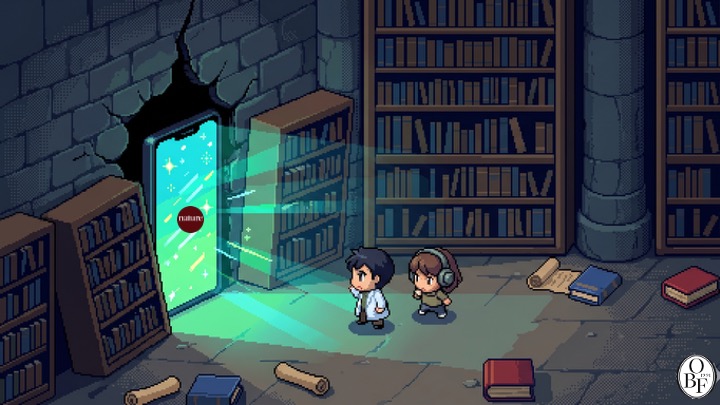
Nature’s reasoning is this: more trustworthy voices need to exist on platforms overrun with misinformation. In fact, this isn’t Nature’s first foray into social media — it already runs well-established channels on Instagram and YouTube. But TikTok is a different challenge altogether. On Instagram, infographics and captions can supply context; on YouTube, videos running over 10 minutes can preserve depth. On a 3-minute vertical video, even that becomes difficult.
Still, there’s a precedent. During the COVID-19 pandemic, the World Health Organization (WHO) partnered directly with TikTok to reduce SARS-CoV-2 misinformation, and that case helped inform this decision.
That said, Nature made clear its own efforts alone aren’t enough. The editorial also calls on platform companies to share responsibility — to guide creators on best practices for science communication, disclose potential conflicts of interest, and build systems that flag unverified claims. It further proposes that trusted scientific institutions work alongside platform companies to improve policy.
Oz’s Lens
Honestly, watching Nature’s decision reminded me of a dilemma I kept running into while building GTM3 strategies. There’s one failure pattern I saw most often in GTM work: the message gets damaged along with the channel migration. “Customers moved to mobile, so we should too” is correct as far as it goes — but the moment you hollow out your core value to fit mobile, the brand loses its meaning. I once advised a B2B company that, convinced ‘short-form is the future,’ compressed a complex technical product explanation into a 30-second video — and ended up with a flood of customer inquiries instead. Because the information wasn’t sufficient, customers had to pick up the phone and ask directly.
Nature’s dilemma is fundamentally the same. Channel migration and format transformation are different problems. Moving onto TikTok is channel migration. But if fitting into a 3-minute video means stripping out sources, context, and caveats, that’s format transformation. In science, sources, context, and caveats aren’t add-on features — they’re the entire reason the thing exists.
Let’s look at a domestic example for a moment. DBpia, a well-known Korean academic paper and journal site, has recently been making active use of social media, leaving behind a rather good example.
DBpia - Korea’s Academic AI Platform for Papers, Journals, and MagazinesDiscover domestic and international papers and academic resources on DBpia, Korea’s No. 1 academic AI platform. Search the latest and free papers across the humanities, social sciences, natural sciences, and more — quickly and easily!I think this is a question that applies equally to anyone working with expert knowledge. Short-form content is excellent at grabbing attention. But once you’ve grabbed it, where do you send people next? If that ‘next step’ isn’t designed, information served in a light container just gets consumed lightly, and that’s the end of it.
That said, fairness requires acknowledging the counterargument. Research presented at CHI 2026 found that when experts made videos directly debunking health misinformation on TikTok, viewers’ trust in that misinformation dropped significantly. It’s empirical evidence that the mere presence of experts can reshape a platform’s information ecosystem. Nature’s choice isn’t meaningless. I just think short-form needs to be an ‘entrance,’ not the end of the road.
Closing
Let me sum up this issue in three points.
First, the center of gravity in information consumption is shifting from text to video, and from news brands to individual creators. 44% of 18-to-24-year-olds use social media as their primary news source, and this is a structural shift, not a passing trend.
Second, a 3-minute video is a format that structurally struggles to hold the sources, context, and caveats essential to scientific verification. This limitation stems not from creators’ intentions, but from the physical constraints of the medium itself.
Third, Nature still went to TikTok because it judged that even a light container needs a trustworthy voice inside it. The real challenge lies in the next step — designing a path that guides attention toward depth once it’s been captured. Short-form content is most powerful as an entrance; it becomes dangerous when it becomes the exit.
One suggestion for readers of this newsletter: the next time you come across intriguing scientific information in short-form content, just check once whether a source is cited. If there’s no source, what you’re looking at isn’t information — it’s opinion. Have you ever gone back to verify information you came across on TikTok or YouTube Shorts? Or do you just scroll past? I’m curious about your experience — share it in the comments.
References & Further Reading
Primary sources
- Nature Editorial, “The future of science communication is not an article like this”, Nature, 2026. : This is the Nature editorial that sparked today’s newsletter. It captures the reasoning and concerns behind a science journal’s move into short-form video.
- R. Morais & C. E. Fernandes, “Scrolling through science: how accurate is science content on TikTok”, Journal of Science Communication 25, A03, 2026. : An empirical study analyzing the lack of source citation in TikTok science content. The methodology section is particularly solid.
- B. Nickel et al., “Misleading claims about medical screening tests on social media”, JAMA Network Open 8, e2461940, 2025. : A key study analyzing roughly 1,000 pieces of medical content on Instagram and TikTok. The data on financial conflicts of interest stands out.
Background
- Reuters Institute, “Understanding young news audiences at a time of rapid change”, 2026. : A 14-year longitudinal analysis of news consumption patterns among 18-to-24-year-olds. It’s the source of the key data cited in this newsletter.
- Reuters Institute, “Digital News Report 2025”. : A comprehensive report on news consumption surveying roughly 100,000 people across 48 countries. It details the rising trend in video consumption.
- C. Kirkpatrick & L. Lawrie, “TikTok as a Source of Health Information and Misinformation for Young Women in the United States”, JMIR Infodemiology 4, e54663, 2024. : A study empirically demonstrating the “third-person effect.” The phenomenon of recognizing misinformation while believing oneself exempt from it stands out.
- CHI 2026, “Expert-led Debunking of Health Misinformation on TikTok”. : An empirical study showing that expert-led debunking of misinformation on TikTok actually works. This is the basis for the counterargument cited in the “Oz’s Lens” section.

The author, Kwangseob Ahn, is a professor of business administration at Sejong University and lead consultant at OBF (Oswarld Boutique Consulting Firm). He teaches statistics and data analysis — business data management and business analytics — while leading GTM and AI strategy consulting in the field, designing the seam between technology and business. He has published academic research on a memory architecture for AI dialogue systems (HEMA) and runs Daily Arxiv, a daily curation of global AI papers. He holds a master’s from Korea University’s Graduate School of Technology Management and a KMBA. He is the author of Homo Brainless: The People Who Outsource Their Thinking.
Footnotes
-
Peer Review: The process by which experts in the same field verify the validity and methodology of a paper before it’s published in a journal. It’s often considered the single most important safeguard of scientific quality. ↩
-
Third-Person Effect: A psychological bias in which people believe media’s negative influence will affect others more than themselves. The classic form of this is the belief that “I’m fine, but other people will be fooled.” ↩
-
GTM (Go-To-Market): The strategy for bringing a product or service to market — designing who to reach, through which channels, and with what message. ↩
Related issues
 Issue #120AI & Tech
SpaceX at $135: Dream Price or Bubble Price?
Institutions bid 4x the offering while Morningstar says $63 — the gap is a bet on data centers that don't exist yet.
 Issue #110AI & Tech
Jensen Huang's Ten Days: Beijing to Taipei
Three capitals, three dilemmas—the cost of Nvidia's tightrope walk is starting to show.
 Issue #106AI & Tech
A Single Search Box Is Rewriting the Food Chain
The apex predator of its own ecosystem is now redesigning it
Your take shapes the next issue
What resonated most in this issue, or where has your experience been different?