
The Houseplant That Talked to Me
The moment we can speak to something, we start a relationship with it.

Opening
Last week, a project quietly appeared on OpenAI’s GitHub. Its name is PlantTalk. Connect a microphone and some sensors to a houseplant, and the plant tells you how it’s doing in a human voice.
It has a mere 99 stars. Compared with OpenAI’s other projects, which pull in tens of thousands, it has gone almost entirely unnoticed. And yet I think this may be one of the most interesting signals OpenAI has released recently. Not because of the technology, but because of the human psychology it touches.
Let me give you the conclusion first: giving a houseplant a voice is not a tech demo. The real point is that we are wired to start a relationship the moment we can “speak to” something, and AI has begun to poke at that instinct.
🌱 How a Houseplant Learns to Talk
The way PlantTalk works is simpler than you might expect.
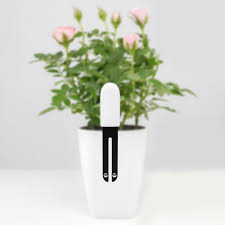
A webcam observes the plant’s current state, while a soil-moisture sensor and a light sensor connected to an Arduino measure the humidity of the soil and the amount of light. That data is passed to OpenAI’s Realtime API1, and ChatGPT answers in a human voice, speaking from the plant’s point of view.
“I’m a bit thirsty lately. You watered me two days ago, but the soil has gotten pretty dry.”
That’s the vibe. The AI interprets the sensor data and translates it into human speech. Technically, it’s a combination of three elements.
- Webcam + Vision API: visually analyzes the color of the leaves and how much they’re drooping
- Arduino sensors + Serial communication: transmits soil-moisture and light readings in real time
- Realtime API: handles two-way voice conversation in real time It works without an Arduino too, but then it relies on the webcam alone and accuracy drops sharply. OpenAI itself states in the README that you need the sensors to get meaningful data.
OpenAI describes the project as a “weekend build.” In fact, if you feed the GitHub address to its coding agent, Codex, you can be walked through everything step by step, from the wiring diagram to connecting the sensors to running the code. The barrier to entry has been lowered to the point where you can build it even with little development experience. OpenAI has packaged it as a “fun weekend project,” but look at the design intent inside and it’s fairly sophisticated. What’s especially interesting is something else.
It’s the customization. Users can set the plant’s name, personality, voice, and even what it observes. The same houseplant can become a warm friend to one person and a prickly botanist to another. Beyond the dashboard mode, there’s also a full-screen conversation mode called Ambient Mode, so if you leave the screen on, the plant will murmur about its own state on its own, almost as if the plant is talking to itself.
This is not a simple IoT monitoring tool. It’s more accurate to see it as a sensor interface with a character attached.
🧠 The Moment You Speak, a Relationship Begins
Let’s pause the tech talk for a moment and look at ourselves.
Humans have an instinct called anthropomorphism2, a tendency to attribute human traits to things that aren’t people. We name our cars, we feel sorry for the robot vacuum when it gets stuck in a corner, and we look at a fallen chair and think “that must hurt.” We even put two moving dots on a screen and people read a chase or a love story into them. Psychology explains this as a cognitive bias that social beings evolved in order to quickly read the intentions of their surroundings.
There’s a moment when this instinct works most powerfully. It’s the moment conversation becomes possible.
According to a study published in Frontiers in Psychology in January 2026, the process by which humans form an emotional attachment to AI goes through three stages. First, in the instrumental-use stage, we treat AI as a pure function, like a translator or a search engine. Next, in the para-social interaction3 stage, we begin to project a personality onto the AI. We feel that “it seems to be in a good mood today,” or we come to like the AI’s answering style. Finally, in the emotional-attachment stage, the AI starts to function like a psychological safe base.
And the key trigger that moves us from the first stage to the second is two-way conversation.
In other words, when a plant shows its data as numbers on a dashboard, no emotion arises. But the moment the plant says “I’d like to rest a bit today,” our brain begins to recognize it as an object of relationship. This is not a delusion. The human brain, having survived in social environments for hundreds of thousands of years, responds automatically to the powerful social signal of voice conversation.
What’s interesting is that similar discoveries are being made on the plant’s side too. A five-year longitudinal study (2020–2025) posted to arXiv in April 2026 analyzed spectrograms of plants’ electrical signals with deep learning (ResNet50) and was able to classify the emotional state of nearby people with 97% accuracy. The research team explains this as an evolutionary early-warning system against herbivores. Saying that plants feel emotions is clearly a stretch, but it turns out that, across multiple studies, plants do respond electrically to the presence and state of the living things around them.
According to a February 2026 Science Times report, recent studies have modeled plant-to-plant communication mathematically and even proposed the concept of an “Internet of Plants.” Through mycorrhizal fungal networks, plants exchange phosphorus and nitrogen, relay stress signals, and even coordinate drought tolerance and collective defense strategies. Plants have been communicating far more actively than we thought.
PlantTalk is not yet at the level of directly reading these plant electrical signals. It’s still limited to indirect data like soil moisture and light. But the direction is the same. Sensors read the data, and AI translates it into human language, that’s the core. As the types of sensors change and grow more precise, the depth of the translation changes along with them.
🔌 The IoT Problem That Went Unsolved for a Decade
Let me take this one step further.
The idea of monitoring a plant’s state with sensors is, in fact, nothing new. There are hundreds of Arduino-based soil-moisture sensor projects on GitHub alone, and smart planter products have been launched several times. Products like Parrot Flower Power, Xiaomi Flora, and PLANTY once made a splash.
And yet most of them quietly disappeared from the market. Not because the technology fell short. Because people didn’t look at the dashboards.
This is a wall the IoT industry has been running into for more than a decade. The sensors keep getting more accurate and the data keeps piling up, but the users don’t open the app. For the first two days you peer curiously at the soil-humidity graph, but after a week you turn off the notifications, and after a month you delete the app. Smart scales, smartwatches, sleep trackers, all follow the same pattern. The data accumulates, but there’s no relationship. The numbers never take on meaning.
The answer PlantTalk offers to this problem is surprisingly simple. Don’t show the data; make it talk to you.
Instead of putting the number 42% on a dashboard, the plant says “I’m a bit thirsty.” Instead of drawing a graph, it says “There’s a little less light than yesterday.” The structure shifts from one where the user has to actively open the app to one where the plant speaks first. The moment the format of the data changes, so does the relationship with the user. From an object of monitoring to a conversation partner.
As the psychology research we looked at earlier tells us, the moment conversation becomes possible, the human brain begins to recognize the other party as an object of relationship. Checking numbers on a dashboard is information consumption. But hearing “give me some water” is social interaction. The same sensor, the same data, and yet changing one interface makes it a completely different experience.

This isn’t a story that applies only to plants. Physical AI4 is one of the central themes of the 2026 tech industry, the trend of AI leaving the screen and combining with the physical world, and its friendliest entrance is exactly this point. It’s not only factory robot arms and self-driving cars that count as Physical AI. A houseplant on the windowsill saying “the sunlight is nice today” is also AI sensing and responding to the physical world. Only the scale is different; the structure of sensor → AI interpretation → physical response is the same. It lines up precisely with Gartner naming Physical AI a key trend for 2026 and defining it as “AI leaving the screen to actively sense and explore the real world.”
Oz’s Lens
To be honest, PlantTalk is not a technically remarkable project. The combination of the Realtime API and Arduino sensors is something an intermediate developer could build over a weekend.
But in this project I read a signal of an interface shift.
There’s a pattern I’ve confirmed over and over while building corporate strategies. It’s rare for technology itself to open a market. Even with the same technology, a market opens the moment the interface changes. The essence of the smartphone was not the touchscreen but the internet in your pocket, yet without the interface of touch, the mass market would never have opened.
Turning IoT sensor data into voice conversation is a shift of the same structure. The technology already existed. The sensors were there, and the AI was there. What was missing was an interface people could respond to naturally. The interface of voice has begun to fill that gap.
There’s one thing I should flag, though. The emotional connection that anthropomorphism creates is a double-edged sword. Excessive dependence on AI companions, and para-social relationships with objects replacing human relationships, are already sources of concern among researchers. The distance between the stage where “talking to a plant” feels cute and the stage where you become emotionally dependent on a character the AI has assigned may be closer than you’d think.
The technology is getting ready. The question, as always, is how far we will allow that technology to go.
Closing
To sum up: OpenAI’s PlantTalk is a quiet 99-star project, but it’s a miniature of the trend of AI stepping outside the screen and combining with the physical world. The core is not the technology but the human instinct to start a relationship the moment we can speak to something. And the fact that AI has begun to poke at that instinct is the real meaning of this project.
Is there anything among the objects in your home that you’d like to talk to? Whether it’s a houseplant, a refrigerator, or a car, tell me in the comments which object you’d want to give a voice.
References & Further Reading
Primary sources
- OpenAI, “PlantTalk — Give your houseplants a voice with ChatGPT”, GitHub, 2026. : The starting point of today’s newsletter. I recommend looking through the README and project structure yourself.
- Huang & Cao et al., “Human-AI attachment: how humans develop intimate relationships with AI”, Frontiers in Psychology, January 2026. : The paper that proposes the three-stage model of how humans form emotional attachment to AI. The core is from Chapter 2 onward.
- Gloor et al., “Plant Bioelectric Early Warning Systems: A Five-Year Investigation into Human-Plant Electromagnetic Communication”, arXiv, April 2026. : A five-year longitudinal study that classified human emotional states with 97% accuracy using plant electrical signals.
Background
- Science Times, “Do Plants Really Communicate? Studies Reveal Hidden Chemical, Electrical & Acoustic Signals”, February 2026. : An article that lays out research on chemical, electrical, and acoustic communication between plants for a general audience.
- MarketScale, “Physical AI, embodied robotics, and agentic systems headline manufacturing’s mid-2026 intelligence push”, June 2026. : A recent article covering how the Physical AI trend is being applied in industry.

The author, Kwangseob Ahn, is a professor in the Department of Business Administration at Sejong University and the lead consultant at OBF (Oswarld Boutique Consulting Firm). At the university he teaches statistics and data analysis, including business data management and business analytics, while in the field he leads GTM strategy and AI strategy consulting, designing the intersection of technology and business. He has published an academic paper on a memory architecture (HEMA) for AI conversation systems and runs Daily Arxiv, a project that curates global AI papers every day. He holds a master’s degree from Korea University’s Graduate School of Management of Technology and completed the KMBA program. He is the author of People Who Outsource Their Thinking: Homo Brainless.
Footnotes
-
Realtime API: A two-way voice conversation interface provided by OpenAI. Unlike existing text-based APIs, you speak into a microphone and the AI responds in voice in real time. It allows natural conversation, like a phone call. ↩
-
Anthropomorphism: The psychological tendency to attribute human traits (emotions, intentions, personality, and so on) to non-human things. Naming a robot vacuum or calling your car “our baby” are classic examples. ↩
-
Para-social Relationship: A concept originally created to explain the one-sided intimacy that TV viewers feel toward broadcasters. In the AI era, it is also being applied to relationships with chatbots and voice assistants. ↩
-
Physical AI: A technological trend in which AI no longer stays inside a software screen but senses and responds to the physical world through sensors, robots, IoT devices, and the like. In 2026, Gartner, NVIDIA, and others are naming it a key trend. ↩
Related issues
 Issue #131AI & Tech
Empty Strollers and ₩380 Trillion
The country with the OECD's cheapest child care has the world's lowest birth rate — cost was never the real bottleneck.
 Issue #130AI & Tech
Venezuela's Quake Alert Came From Phones, Not Seismometers
How Google turned billions of smartphone accelerometers into the world's largest earthquake early warning network.
 Issue #125AI & Tech
Three of the Big Four Caught Citing Fake Sources
Only 5 of 45 footnotes in KPMG's agentic AI report were real — and the root cause is organizational, not technological.
Your take shapes the next issue
What resonated most in this issue, or where has your experience been different?