
The Rabbit Sites Died, But the Bill Still Came
112 chapters translated for fun — a Korean court just set the price at ₩96,370,000 (~$70,000).
Opening
On the night of April 27, three of Korea’s largest illegal content sites shut down on the same day: Newtoki for webtoons, Manatoki for Japanese manga, and Booktoki for web novels. As if by agreement, all three left the same notice — “We are deleting all data in bulk and have no plans whatsoever to resume service” — and then vanished.
Three months later, on July 10, the Seoul Central District Court quietly handed down a ruling. It was a civil judgment ordering an individual — who had produced translations and handed them over to an illegal manga site — to pay ₩96,370,000 (~$70,000) in damages. The person hadn’t even been paid for the work; in their own words, it was “a personal hobby and fan activity.” As I write this on August 4, the story had just started breaking in the press, under headlines like “First case: ₩100 million in damages for uploading translations just for fun.”
Meanwhile, in Korea’s developer community, an entirely different incident was unfolding: an open-source developer who had been pulling data from Blue Ribbon Survey — a Korean restaurant-review service — into an AI agent received a formal legal complaint.
Fan translation of manga, an illegal webtoon site, open-source scraping — three cases that look completely unrelated. But let me give you the conclusion up front: they’re all the same story. The language of exemption — “I wasn’t paid for it,” “it was public anyway,” “I did it with good intentions” — is collapsing all at once in Korea this summer of 2026.
The Cost of a “Just for Fun” Translation
The Korea Copyright Commission published this ruling on July 28, 2026 (Seoul Central District Court 2025 Gahap 9142), and here are the facts.
A publisher acquired the exclusive right to publish1 the Korean translation of a Japanese comic in early 2024. But the comic already had fan translators. Active on a community site, these people had been translating and posting the comic themselves even before the publisher secured its official publishing rights.
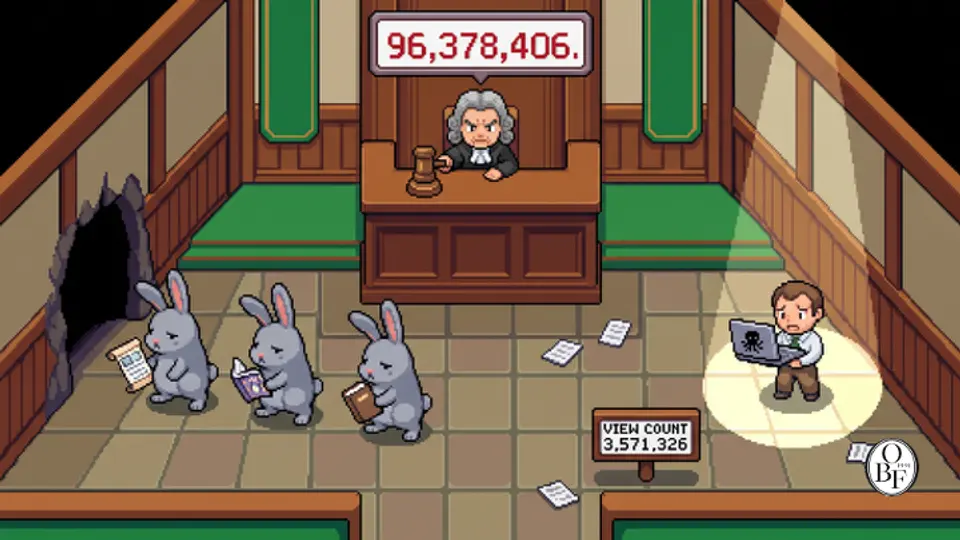
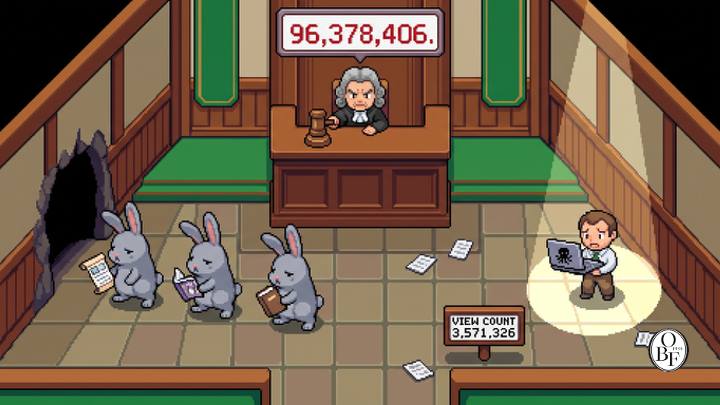
The publisher announced its official release and requested that the existing translations be taken down. If things had stopped there, this ruling probably wouldn’t exist. But the translator didn’t stop. From March to June 2024, they contacted the operator of an illegal comic site via Telegram and handed over translations covering a total of 112 chapters. The cumulative view count for the translations posted on that site topped 3.57 million.
The criminal case had already concluded. In January 2025, the Chuncheon District Court issued a summary order2 imposing a fine of ₩1,000,000 for violating copyright law. A fine of ₩1,000,000. The translator probably thought, too, “this is where it ends.”
The civil case was different. At trial, the defendant made two arguments. One: “I only did the translating — I didn’t conspire in posting it to the site.” The other: “This was a non-commercial personal hobby and fan activity, so it counts as fair use3.”
The court accepted neither. On the conspiracy point, the already-final criminal ruling served as compelling evidence. And the ruling’s real weight falls on its judgment about the fair-use claim — for which the court cited three grounds. The comic is sold commercially; the defendant translated it not partially but in its entirety, as-is; and that act led to a decline in paying customers and damage to the work’s market value. In other words, “whether it was a hobby” didn’t matter. What the court weighed wasn’t motive but the effect on the market.
How the Court Calculated the Damages
What I found most fascinating about this ruling is the process behind the damages figure, ₩96,378,406 (~$69,700). From a data person’s perspective, this ruling is essentially a dispute over an estimation model.
The plaintiff publisher’s initial claim was about ₩339,100,000 (~$244,600). The formula worked like this: multiply the per-episode view counts on the illegal site by 4.904, an “estimated overall multiplier for actual illegal-channel viewers” pulled from the Ministry of Culture, Sports and Tourism’s “2023 Comics Industry White Paper.” That multiplier is the rate of people who said they’d experienced illegal webtoon use (61.3%) divided by the rate who said they’d used overseas scan sites specifically (12.5%) — the logic being, “this content surely spread through other illegal channels too, so let’s scale it up 4.9x.”
The court rejected this multiplier. It found no reasonable explanation for why that multiplication should hold, and no basis for holding this particular defendant liable for damage that spread through other channels. The court put the brakes on a method that manufactures a “diffusion multiplier” by dividing the rates of two different, unrelated survey questions — and I think that’s a fair criticism. Just because a statistic comes from a government white paper doesn’t mean any manipulation of it is automatically justified.
Instead, the court invoked Article 126 of the Copyright Act4. When damage has clearly occurred but the exact amount is hard to calculate, this provision lets the court determine a “reasonable amount of damages” by weighing the arguments and evidence presented. Here’s how it did the math:
- It took the total view count across the 122 posts on the illegal site, 3,571,326 views, divided by the number of posts to get an average view count of 29,273 per episode, and treated that as the per-episode user count.
- From the Comics Industry White Paper, it took the 39.7% of respondents who said “if the illegal channel were blocked, I’d pay for it” and adopted that figure as the estimated ratio of paying users.
- It then multiplied this by the estimated revenue per episode based on the plaintiff platform’s ownership/rental data (₩45.9 (~$0.03) for episode 1, ₩222.9 (~$0.16) from episode 2 onward).
The result: roughly ₩530,000 to ₩2,590,000 (~$380–$1,870) per episode, totaling ₩96,378,406 (~$69,700) — about 96 times the ₩1,000,000 (~$720) criminal fine. Converted per view, that works out to roughly ₩27 (~$0.02) in liability for every single view on the illegal site.
Two things about the structure of this stand out to me. First, the illegal site’s own view counter became the key piece of evidence for calculating damages. The traffic data the pirate site accumulated on its own turned into a boomerang aimed at a participant in its own ecosystem. Second, of the white paper’s survey figures, the 4.904 multiplier was rejected while the 39.7% was accepted. Even from the same source, only “numbers whose derivation logic can be explained” survived in court. I think there’s a lesson here for anyone building an argument on data.
Why Three Rabbits Closed Their Doors on the Same Day
If this ruling was aimed at an individual translator, the real body of the ecosystem lies elsewhere. Newtoki, Manatoki, Booktoki. It’s no coincidence that these three sites shut down simultaneously on April 27.
Two weeks later, on May 11, the so-called “Emergency Access Blocking System” under the revised Copyright Act took effect. Previously, blocking a single illegal site required a review process that took 2 to 3 weeks. From the site operator’s perspective, once blocked, changing a single digit at the end of the domain took only a day — it was effectively a game of tag. The revised law flipped this around. When infringement is clear and irrecoverable damage is a concern, the site is now blocked first, with post-hoc review following within 5 days.
And starting next Monday, August 11, follow-up measures take effect. Providing links to illegal copies for commercial purposes becomes punishable, and intentional infringement now allows for punitive damages of up to 5 times the actual damages. The maximum sentence also rises to 7 years in prison and a fine of ₩100 million (~$72,000). Given that the ₩96.37 million (~$69,600) figure in this ruling came from the conservative calculation method under Article 126, it means the leading digit of claims in similar future cases could look very different.
Looking at the scale involved, it’s easy to guess why this system changed. According to industry estimates reported in the media, a single site like Newtoki caused roughly ₩39.8 billion (~$28.7 million) in monthly damages with around 12.2 million monthly users, and the estimated annual damages across the three sites reached approximately ₩721.5 billion (~$521 million). Of course, these damage estimates rest on the assumption that “all illegal use would have converted to paid use,” so they’re hard to accept at face value. Interestingly, this very ruling corrects that overestimation problem by showing us a real conversion rate: 39.7%.
 Still, there’s something unsettling about this collapse. The operators of the three sites are reportedly naturalized citizens of Japan, and the investigation has effectively stalled. “Bulk data deletion” sounds like it protects users, but flip it around and it also means the evidence for ongoing lawsuits has vanished. This looks less like resolution and more like flight. Naturally, then, the civil litigation front for rights holders is shifting — away from operators abroad who can’t be caught, and toward domestic participants who can be. The fact that the defendant in this ruling was an individual who handed off a translation, not a site operator, is the opening shot of that shift.
The Same Question Crosses Over Into Developer Territory
Now for the third case. This time the stage isn’t manhwa — it’s GitHub.
This year, an open-source project called “K-Skill” drew considerable attention in the Korean developer community. It’s a collection of skills5 that let AI agents handle Korean everyday services — checking SRT and KTX (Korea’s high-speed rail) schedules, weather, legal search, stock information. The direction itself was interesting: building touchpoints for Korean services in the agent era.
The problem started when one of those skills pulled data from Blue Ribbon Survey, a restaurant review service. Piecing together the publicly available material, here’s how it played out. In late March, Blue Ribbon announced a ban on unauthorized crawling and AI-training use of its data, and moved its location-based restaurant search feature behind a premium paywall priced at ₩11,000/year, cutting off the existing automated access. In response, the developer paid for a premium account himself and attempted to set it up as a kind of proxy server so other users could access the data through a workaround. When the automated requests started getting blocked with 403 errors, he even merged code designed to bypass the blocking logic. Blue Ribbon filed a criminal complaint alleging copyright infringement, violation of the Information and Communications Network Act, and obstruction of business by computer.
What happened after the complaint reveals the true character of this case even more clearly. The developer protested that it was “unfair,” insisting the project was “open source for the public good.” He then went a step further, floating a plan to build his own restaurant-data service called “OpenRibbon” — before the community talked him out of it. In the end, he posted an apology and took down the related posts. One comment from the community cut right to the heart of it: “How is that any different from making Newtoki?”
The Blue Ribbon Lawsuit: Where Are the Boundaries of Data Use in the AI Era?After seeing the lawsuit against the K-Skill developer who used Blue Ribbon’s data, I wrote about the data and development ethics we need to seriously reconsider in the AI era.Of course, this case is still just at the complaint stage, and the facts remain contested. No guilty verdict has been handed down. But look at the structure. Someone else’s paid data, built up at their own expense, gets rerouted around an explicit block and redistributed for free. And that act gets justified using the language of “open source” and “the public good.” It’s exactly the same grammar as the manhwa translator’s “it was fan activity.” Only the object has changed — from comic books to a database — and the tool has changed — from translation to crawling. Both parties have since taken down the original posts, but anonymous users captured screenshots, and thanks to web crawlers and cached pages, the complaint document and posts the developer put up on Threads and LinkedIn are still findable. Don’t you feel the irony here too? This will probably end up being used as damaging evidence against him in the lawsuit.
And this case has one new dimension that neither of the previous two had: the AI agent. Until now, crawling disputes were conflicts between human-built bots and services. In the agent era, it becomes an everyday occurrence for AI acting on a user’s behalf to access a service. At that point, services have to decide whether to allow the agent’s access, block it, or sell it. The Blue Ribbon incident is an early example of this question surfacing in Korea in the form of a legal dispute.
Oz’s Lens
Here’s how I see the change running through these three cases: the “excuse narrative for unauthorized use” is running out its lifespan in Korea. Because it’s fan devotion. Because it’s a hobby. Because it’s for the public good. Because it’s open source. The language that circulated freely for more than 20 years is being rejected simultaneously, within the span of a few months, on three separate stages: the courts, regulators, and the community itself. That last one matters most. In the Blue Ribbon case, the sharpest criticism the developer faced didn’t come from the rights holder — it came from fellow developers. The real signal that a norm has shifted isn’t a legal ruling. It’s when the community’s own vocabulary changes.
Doing go-to-market strategy consulting, I kept running into the same line item whenever I reviewed business plans from content and data companies: the practice of treating losses from illegal distribution as a “cost you can’t help anyway” — an exogenous variable, like weather. Since it couldn’t be stopped, it wasn’t calculated. Since it wasn’t calculated, it never made it into strategy. This is exactly what the recent ruling changes. Average view count times a 39.7% conversion rate times revenue per episode — now there’s a court-endorsed formula for that calculation. That means infringement has shifted from being a “cost” to being a “recoverable claim.” When the expected value of litigation changes, rights holders’ behavior changes with it — and starting August 11, that expected value carries a multiplier of up to 5x.
At the same time, I think this creates homework for the companies supplying the data too. Blue Ribbon’s approach — “block and sue” — is defense, not strategy. The flow of agents searching, booking, and paying on behalf of customers won’t disappear just because you try to block it. What’s needed instead is designing agent access as a product: pricing tiers, scope of permissions, logging, and settlement structures. This summer’s cases are, in a sense, an overdue bill for having put off that product design. The quick-moving companies have already started converting this into APIs, MCP, and similar interfaces — reshaping it into a new pipeline for collecting money in the light, above ground.
For the record, this piece is a general commentary on specific cases, not legal advice — please keep that in mind.
Closing
The core of this special feature comes down to three lines.
- A fan translation done purely as a hobby was found liable for ₩96,370,000 in damages. The court looked not at motive but at market effect, and the illegal site’s view count became evidence for calculating the damages.
- The simultaneous shutdown of Newtoki, Manatoki, and Booktoki looks less like surrender than flight, which is why liability is shifting toward “whichever participant can actually be caught.” Starting August 11, punitive damages get added to the mix.
- The Blue Ribbon incident is the same question transplanted onto data in the age of AI agents. The next front line won’t be comics — it’ll be an agent’s right to access data.
Before you casually “just use” outside content or data next time, I’d suggest asking yourself just one question: “Does this replace something someone would otherwise pay for?” In the three cases of this summer, that’s ultimately the single question the courts and the community were actually asking.
I’m curious — at your company or in your product, where has the line been drawn on what counts as “fine to just use” when it comes to outside data and content? If you’ve ever wrestled with a fuzzy boundary around crawling, scraping, or collecting data to train AI, I’d love to hear about it in the comments. I’ll factor it in when I cover “data access rights in the age of agents” in a future issue.
💬 Tell me in the comments about the gray zones around data and content use you’ve run into on the job. I’ll factor it into the next issue. 📨 If you have a colleague who works in crawling or the content business, please share this piece with them.
📎 References & Further Reading
Primary sources
- Seoul Central District Court, 61st Civil Division, Case No. 2025Gahap9142, Damages Ruling, decided July 10, 2026. ··· This is the backbone of today’s story. The section on calculating damages (Reasoning 3-B) is the highlight.
- “Exclusive: Even a For-Fun Fan Translation Posted on an Illegal Comics Site Gets ₩100 Million in Damages — A First,” Nate News (August 4, 2026) ··· The article that first reported this ruling.
- “Illegal Webtoon, Comics, and Novel Piracy Sites Newtoki, Manatoki, and Booktoki Shut Down Simultaneously,” HuffPost Korea (April 2026) ··· Lays out how the three sites were shut down and estimates the scale of damage.
- “Illegal Webtoon Site ‘Newtoki’ Shuts Down Voluntarily: ‘No Plans to Relaunch,’” Daum News (April 27, 2026) ··· Includes the original shutdown notice and the timeline for the emergency blocking system.
- Ministry of Culture, Sports and Tourism, 2023 White Paper on the Comics Industry, 2024. ··· The source the court cited as the basis for the 39.7% paid-conversion rate. Contains statistics on illegal-use patterns.
Blue Ribbon / K-Skill incident
- NomaDamas/k-skill, GitHub ··· The repository at the center of the controversy. Separate from the dispute itself, it’s worth a look if you’re curious about the agent-skill ecosystem.
- “A Timeline of the Blue Ribbon Lawsuit Incident,” velog ··· A chronological account from a developer’s point of view. Since the case is still ongoing, keep in mind that some facts may be disputed.
Related past issues worth reading
- OZ Talking: What the Luddites Smashed Wasn’t the Machines ··· Covers the recurring pattern of norms and institutions being remade in the face of technological change. A story on the same axis as this issue.
📝 Glossary

Footnotes
-
Exclusive publication right (baetajeok balhaenggwon): An exclusive right granted by a copyright holder specifying that “only you have the right to publish this work in this format.” In this case, it was the exclusive right to distribute and sell Korean-translated publications of a Japanese comic — which meant that a third party’s unauthorized posting of a translation directly infringed on this right. ↩
-
Summary order (yaksik-myeongnyeong): A simplified criminal procedure that imposes a fine through written review alone, without a formal trial. If the defendant doesn’t object, it’s finalized as-is, and once finalized it carries the same legal effect as a verdict. ↩
-
Fair use (Copyright Act Article 35-5): A provision that allows a work to be used without permission when the use doesn’t conflict with the work’s normal exploitation and doesn’t unreasonably harm the copyright holder’s legitimate interests. It’s judged by weighing the purpose of use, the nature of the work, the amount used, and the effect on the market. ↩
-
Copyright Act Article 126 (recognition of a reasonable amount of damages): A provision allowing courts to use their discretion to set a “reasonable amount of damages” — based on the substance of arguments and the results of evidence examination — when it’s clear that damage occurred but the exact amount is hard to prove. This is the provision behind the ₩96,370,000 figure in this ruling. ↩
-
Agent skill: An extension module that lets an AI agent handle a specific service or task. Think of it as a plugin — each one adding a discrete capability, like “knowing how to book a train ticket,” onto an agent, the way you’d add abilities to a person one at a time. ↩
Related issues
 Issue #176Business
Why the New Fed Chair Talks Like a Startup Founder
The pitch-deck line "the numbers aren't in yet, but they're coming" has started moving interest rates.
 Issue #175Business
Right on the Trade, Liquidated Anyway
The real cause of last week's Korean market rollercoaster was someone else entirely
 Issue #174Business
The '57% Never Dated' Number Was Wrong From the Start
Fix the denominator and it drops to 21%—the real problem lies outside the dating statistics.
Your take shapes the next issue
What resonated most in this issue, or where has your experience been different?