
Founders Banned, $2 Billion Meta-Manus Deal Unwound
The chip war's next battlefield: AI agents.
Opening
Hello, dear reader. This is Oswarld, and welcome to OZ Talking.
Last December, Meta acquired agentic AI startup Manus for $2 billion. The whole process—from the start of negotiations to signing—took just 10 days. By January of this year, Manus’s technology had already begun integrating into Meta Ads Manager, and its employees were showing up to work at Meta’s Singapore office.
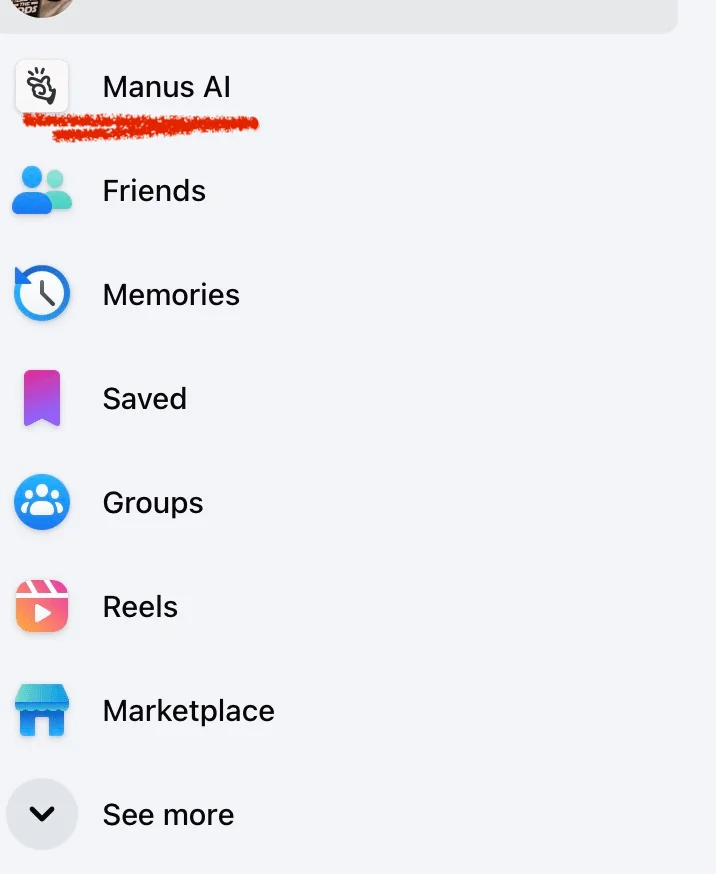
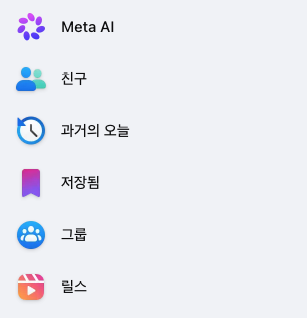
It was even added directly to the Facebook UI—then quietly disappeared. Any guesses why?
But just five months later, the entire deal was unwound. China’s National Development and Reform Commission (NDRC) ordered the transaction voided. Co-founders Xiao Hong and Ji Yichao were slapped with exit bans.
Let me cut to the chase: this isn’t just an M&A dispute. It’s a signal that Beijing has started classifying agentic AI as a strategic asset on par with semiconductors.
🧩 Sealed in 10 Days, Blown Up in 5 Months
Manus’s trajectory was dizzyingly fast.
March 2025: viral demo goes public → April: raises $75 million in a round led by Benchmark → July: relocates Chinese staff to Singapore → December: Annual Recurring Revenue (ARR)1 crosses $100 million → December 29: Meta acquisition announced. Hitting $100 million ARR just 8 months after launch is the fastest ramp in the history of AI startups worldwide.
For Meta, Manus was the “execution layer.” AI agent technology that goes beyond chatbots that merely converse, and actually gets work done. To justify his $70 billion bet on AI infrastructure, Mark Zuckerberg needed AI that acts, not just AI that talks.

The problem was Manus’s birthplace. All three co-founders are Chinese nationals, and the company was originally named ‘蝴蝶效应’ (Chinese for “Butterfly Effect”). It had offices in Wuhan and Beijing and received Chinese government backing. Then, in July 2025, ahead of the acquisition, it shut down its Chinese offices, deleted its Chinese social media accounts, and relocated key staff to Singapore.
This “Singapore detour” rubbed Beijing the wrong way. The Ministry of Commerce launched an investigation on January 8 of this year, and on April 27, the NDRC voided the deal in a single sentence.
The core of the NDRC’s statement came down to a single sentence. “Foreign investment in the Manus project is prohibited, and the parties are required to unwind the transaction.” No reasoning. No cited statute. No grace period.
What’s worth noting is that the NDRC used the word “project,” not “entity.” It amounts to a declaration that Beijing will assert jurisdiction based on where a technology originated, regardless of where the legal entity happens to be incorporated—Singapore or anywhere else.
Related issues
🔒 Why Anthropic Is Hiring a $320K Copywriter
AI can write, but only humans can figure out what to say.
🔒 Why Starbucks Pulled AI Out of Its Stores
It promised 99% accuracy, but baristas trusted their own hands more.
🔒 The Red Crayfish Is Disappearing From Search
Where did all those crayfish go?
Your take shapes the next issue
Reply with your experience or perspective — the best responses feed into future issues.
Sign in to commentAny registered reader can comment — it takes 10 seconds.