
The Sea's Toll Booths: A History of Maritime Passage Fees
The sea was never free by nature—'freedom of navigation' was forged through centuries of war and negotiation.
Opening
Hello, subscribers. This is Oswarld’s Knowledge Talking.
A little while ago, Iran announced it would charge a $1-per-barrel toll on oil tankers passing through the Strait of Hormuz. The payment method: Bitcoin. A toll booth had effectively gone up on this narrow waterway, through which roughly 20% of the world’s seaborne crude oil passes.
International maritime law experts have called this uniformly “illegal.” Charging passage fees on a naturally formed strait is something modern international law explicitly forbids. But here’s the curious part: this principle that “the sea is free” is, historically speaking, a surprisingly recent invention.
Until just 170 years ago, it was taken for granted that every ship passing through a strait paid a toll. Today, I want to trace that history and explain why Iran’s move isn’t simply about money.
🏰 Straits Used to Be “Toll Roads”
The practice of charging tolls at straits is startlingly old. Under the Byzantine Empire, merchant ships passing through the Dardanelles1 paid taxes depending on their cargo. Wine merchants handed over 6 folles2 plus 2 sextarii3 of wine as a toll, while wheat merchants paid 3 folles per modius4. After the Ottoman Empire captured Gallipoli in 1354, the system grew even more organized. The Ottomans treated the Black Sea as effectively their own inland sea, either banning foreign ships outright or imposing steep transit taxes.
But the most dramatic case of maritime tolling happened in Northern Europe. In 1429, Denmark’s Eric VII (Eric of Pomerania) began levying a toll on every foreign ship passing through the Øresund Strait5. This strait was, for all practical purposes, the only gateway from the North Sea into the Baltic.
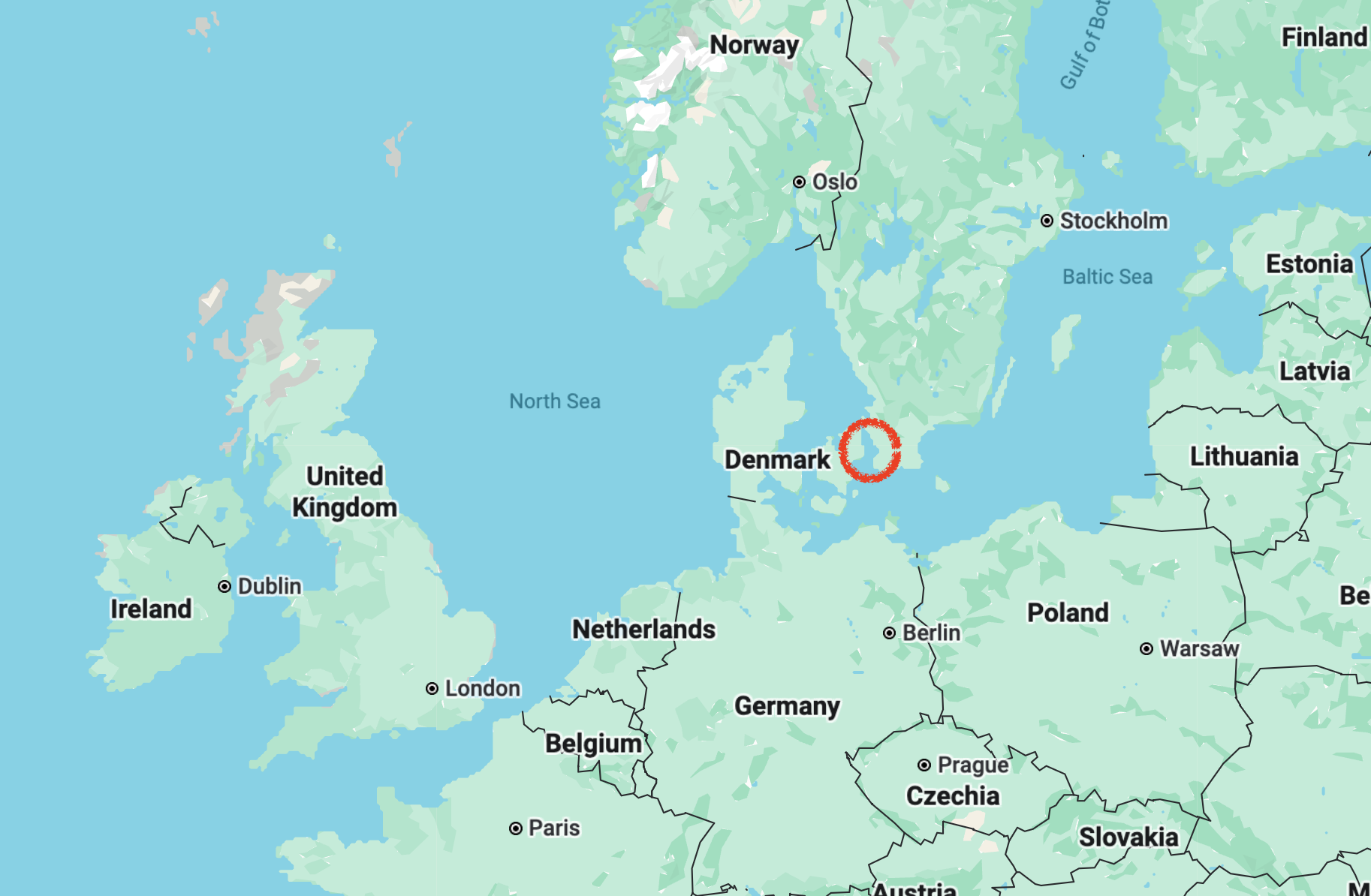
The rule was simple. A ship had to anchor at Helsingør (Elsinore, the setting of Shakespeare’s Hamlet) and pay the Danish crown its toll. Refuse, and cannons from the fortresses on either side of the strait would open fire. From 1567 onward, the system shifted to a tax of 1–2% of the cargo’s declared value—with one ingenious twist. Once a captain declared the value of his cargo, the Danish king had the right to buy the entire cargo at that declared price. Under-declare to cheat the system, and the king could simply buy your goods for a pittance. Doesn’t that sound clever enough to still work today?
In any case, the “Sound Dues” persisted for a staggering 428 years. In the 16th and 17th centuries, this toll accounted for as much as 2/3 of Denmark’s national revenue. Kronborg Castle6 wasn’t just a fortress—it was effectively a giant customs house.
Related issues
🔒 Harvey's $11B Bet: Can Law Survive Without Billable Hours?
A $1 trillion legal industry's hourly billing model is buckling under AI-driven efficiency gains.
🔒 The Wuxia Cult That Traces Back to Middle East Oil
A 3rd-century Persian faith became wuxia fiction's Cult of Light — and that same flame ignited the 20th-century oil industry
🔒 Meta's $6M Verdict Just Gave PMs a New Job
It's not the $6 million verdict that matters — it's the 30-year-old legal shield that just cracked.
Your take shapes the next issue
Reply with your experience or perspective — the best responses feed into future issues.
Sign in to commentAny registered reader can comment — it takes 10 seconds.