
Killing the World's Deadliest Animal With Code
Why Google is breeding 32 million mosquitoes to release in the US

Opening
Reader, do you know which animal kills the most people in the world? Not sharks, not snakes. It’s the mosquito. Every year, roughly 700,000 to 1 million people die from mosquito-borne diseases. Malaria alone killed 597,000 people in 2023, and dengue causes 100 to 400 million infections annually.
And right now, Google has filed an intriguing application with the US Environmental Protection Agency (EPA): a request to release 32 million mosquitoes in California and Florida. It’s a paradoxical strategy — mass-producing the enemy in order to beat the enemy. Let me give you the conclusion up front: this is not a biology experiment but a scale-engineering problem. And scale is exactly what Google does best.
🦟 An Enemy That Shrugs Off Insecticide
The reason mosquitoes are so deadly isn’t the mosquito itself but the pathogens it carries. Malaria, dengue, Zika, chikungunya, West Nile virus — a single mosquito can spread several kinds of lethal disease. There have traditionally been two main ways to fight mosquitoes: spraying insecticide and eliminating habitats (standing water). But both approaches have hit their limits.
Over time, mosquitoes develop resistance to insecticides. As they adapt, the same chemical loses its effectiveness. What’s more, insecticides don’t kill only mosquitoes — beneficial insects like honeybees get hit too. Habitat removal is also nearly impossible in practice, since finding and eliminating every pool of standing water can’t realistically be done. Flowerpot saucers, the insides of tires, storm drains — the Aedes aegypti1 can lay eggs in even the tiniest puddle.
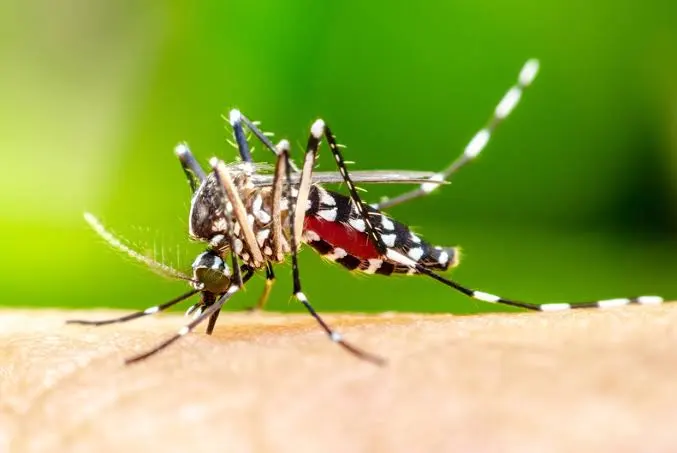
And this isn’t just a story about faraway countries. According to Korea’s Disease Control and Prevention Agency (KDCA), about 205 patients with mosquito-borne infections entered the country in 2024, mostly cases of dengue contracted after travel in Southeast Asia. There are no domestic native infections yet, but the Asian tiger mosquito, which carries dengue, already lives across all of Korea. As climate change pushes the range of subtropical mosquitoes northward, the KDCA has made “preventing establishment” a core priority.
That’s why scientists have been researching a different approach for decades: a method that neutralizes the enemy’s ability to reproduce in the first place.

🔬 How to Beat “Bad Mosquitoes” With “Good Mosquitoes”
Here’s the principle behind the method used by Google’s Debug program. You infect male mosquitoes with a naturally occurring bacterium called Wolbachia2 and then release them into the wild. When these males mate with wild females, the eggs the females lay don’t hatch. Generation after generation, the mosquito population shrinks.
The key point is that only male mosquitoes are released. Male mosquitoes don’t bite people — only females draw blood. So there’s no risk of the released mosquitoes spreading disease.
Google didn’t invent this principle. Called the sterile insect technique3, this method was first put into practice in the 1950s, when the US Department of Agriculture (USDA) used it to wipe out the screwworm fly that plagued livestock. They sterilized male flies with radiation and dropped tens of millions of them from planes every week, and in 1966 they succeeded in completely eradicating the screwworm from the US mainland. It’s a 70-year-old technology.
So what did Google add? The technology to create scale. Suppressing mosquitoes with the Wolbachia method involves three technical bottlenecks.
First, mass rearing. You have to raise millions of mosquitoes reliably and at uniform quality. Debug designed its own automated rearing system. Software engineers, hardware engineers, and mosquito biologists work as one team.
Second, sex sorting. This is the crux. If females get mixed in and released, the result is actually a larger mosquito population. Debug uses AI-based computer vision to inspect each mosquito’s anatomical features and distinguish male from female. It’s a dual structure: a mechanical sieve does the first pass, and cameras plus AI do a second, precise verification.
Third, precise release. You have to release the right number in the right places for it to work. In environments like Singapore, packed with high-rise apartments, route optimization and staffing become a logistics problem — and software is used here too.
To sum up, what Google did was not invent a biological principle but build an engineering system that makes that principle work at industrial scale.
📊 From Fresno to Singapore, and On to Florida
Debug’s journey began in 2016 as a “moonshot project” at Google X. It later moved to the Alphabet subsidiary Verily, before being brought back into Google proper in late 2024. It’s a 10-year journey.
The first large-scale field trial took place in Fresno, California, in 2017. The results are quite striking. The population of female Aedes aegypti (the biting ones) fell 68% in 2017, 95% in 2018, and 84% in 2019. These results were published as a paper in Nature Biotechnology in 2020.
The bigger achievement came from Singapore. Since 2018, Google has run “Project Wolbachia” together with Singapore’s National Environment Agency (NEA), and it currently releases more than 10 million Wolbachia males every week. Here are the results.
- Aedes aegypti population: suppressed 80–90%
- Dengue incidence: reduced more than 70% within 6–12 months of release
According to a cost-effectiveness analysis by a National University of Singapore research team, a nationwide Wolbachia program could have saved an estimated $329.4 million in economic costs over the 2010–2020 period. It’s the paradox that breeding mosquitoes is more economical than killing them.
And now, Google is trying to return to the US. There’s one notable point in this EPA permit application: this time the target isn’t the Aedes aegypti but the southern house mosquito (Culex quinquefasciatus)4. It’s the main vector for West Nile virus and St. Louis encephalitis in the US. According to the CDC, West Nile virus is the most common mosquito-borne disease on the US mainland, causing more than 1,300 severe cases and over 130 deaths each year.
The plan is to release 16 million mosquitoes per year each in Florida and California — a total of 32 million over two years. The EPA’s public comment deadline was June 5, 2026.
Oz’s Lens
Honestly, what I find most striking in this case isn’t the mosquito but the question of right-sizing the technology.
While building GTM strategies, I’ve seen how often the premise that “the latest technology will solve every problem” turns out to be wrong. Right now the AI industry talks about frontier models, AGI, and ultra-large parameter counts, but the AI Google used to catch mosquitoes is a computer-vision-based classification model. It’s not a general-purpose language model like GPT-4 or Claude. It’s a combination of sensors, cameras, automation lines, and a relatively simple image-recognition model.
And that’s exactly the right answer. They used the tool that fit the problem. You don’t need a large language model to tell male mosquitoes from female. You don’t need AGI to optimize logistics routes. “Deploying the right technology at the right scale” — that’s the real lesson Google’s Debug has demonstrated over 10 years.
That said, there’s one caveat. When you suppress a specific mosquito species with Wolbachia, the possibility remains open that another species fills the ecological gap, or that unexpected ecosystem changes emerge over the long term. Singapore’s 6–12-month results are impressive, but no one yet knows the ecological impact 10 or 20 years down the line. Because “technology can solve a problem” and “that solution creates no new problems” are two different stories.
Closing
Here’s the summary. Mosquitoes are humanity’s oldest enemy, killing close to a million people every year. The old weapons — insecticides and habitat removal — have reached their limits. Google took a 70-year-old biological principle, layered engineering onto it in the form of automation, AI, and logistics systems, and proved in Singapore that this problem can be solved at industrial scale.
What makes this case fascinating is that, at a moment when most of the “AI changes the world” narrative is fixated on giant language models and general intelligence, the AI that could actually save the most lives may be a camera that tells male mosquitoes from female.
In your view, can these “side projects” from Big Tech really change public health? Or are they just another packaging of PR and techno-optimism? I’d love to hear your thoughts in the comments.
References & Further Reading
Primary sources
- CDC, “Fighting the World’s Deadliest Animal”, 2026. : An official resource for grasping the overall scale of mosquito-borne disease.
- US EPA Federal Register Notice, “Experimental Use Permit for Debug (Google)”, Docket No. EPA-HQ-OPP-2025-3951, 2026. : The original text of this EPA permit application. Comments could be submitted through June 5.
- Crawford et al., “Efficient production of male Wolbachia-infected Aedes aegypti mosquitoes enables large-scale suppression of wild populations”, Nature Biotechnology, 2020. : The core paper containing the results of Debug’s Fresno field trial.
Background
- Our World in Data, “What are the world’s deadliest animals?”, 2026. : Features a well-made data visualization comparing human deaths by animal.
- Ong et al., “Cost-effectiveness of Wolbachia-based dengue control in Singapore”, PLOS ONE, 2023. : The cost-effectiveness analysis paper on the Wolbachia program.
- Agarwal et al., “Buzzworthy Solutions: Dengue Control and Energy Consumption”, NUS, 2026. : An intriguing study on the side effect that mosquito control even reduces household electricity consumption.
- Debug Project official blog, “Debug expands in Singapore”, May 2026. : The primary source for the news of the Singapore expansion.

The author, Kwangseob Ahn, is a professor in the Department of Business Administration at Sejong University and lead consultant at OBF (Oswarld Boutique Consulting Firm). At the university he teaches statistics and data analysis, including business data management and business analytics, while in the field he leads GTM strategy and AI strategy consulting, designing the intersection of technology and business. He has published an academic paper on a memory architecture (HEMA) for AI conversation systems, and he runs Daily Arxiv, a project that curates global AI papers every day. He completed a master’s program at Korea University’s Graduate School of Technology Management and holds a KMBA. He is the author of People Who Outsource Their Thinking: Homo Brainless.
Footnotes
-
Aedes aegypti: A representative mosquito species that transmits dengue, Zika, chikungunya, and yellow fever. It lives close to humans, bites during the day, and can breed in even the smallest pool of standing water, which makes it hard to eradicate. ↩
-
Wolbachia: A bacterium found in roughly 60% of the world’s insects. When a male mosquito infected with a particular Wolbachia strain mates with an uninfected female, the female’s eggs do not hatch. This phenomenon is called “cytoplasmic incompatibility.” ↩
-
Sterile Insect Technique (SIT): A method in which mass-reared male pests are sterilized (by radiation or bacterial infection) and then released into the wild to lower the reproductive success of wild females. It was first put into practice in the US in the 1950s to eradicate the screwworm fly. ↩
-
Southern house mosquito (Culex quinquefasciatus): The main vector for West Nile virus and St. Louis encephalitis, widely distributed across the southern US. It is the target species of Google’s EPA application. ↩
Related issues
 Issue #121AI & Tech
Why Nature Put Peer-Reviewed Science on TikTok
A 157-year-old journal's TikTok debut reveals what shrinks when science goes short-form.
 Issue #120AI & Tech
SpaceX at $135: Dream Price or Bubble Price?
Institutions bid 4x the offering while Morningstar says $63 — the gap is a bet on data centers that don't exist yet.
 Issue #110AI & Tech
Jensen Huang's Ten Days: Beijing to Taipei
Three capitals, three dilemmas—the cost of Nvidia's tightrope walk is starting to show.
Your take shapes the next issue
What resonated most in this issue, or where has your experience been different?