
AI Swallowed Our Content, and Clicks Went to Zero
Korean publishers still have no legal shield against AI search's traffic squeeze.
Opening
Hello, subscribers. This is OZ Talking. On June 3rd, the UK’s Competition and Markets Authority (CMA)1 handed Google an unprecedented order: legally guarantee publishers the right to refuse having their content used in AI search features. It’s a binding measure the CMA itself calls a “world first.”
“Why cover UK regulation in a Korean newsletter?”
Because the problem this regulation targets — AI summarizing content while clicks to the original source disappear — is exactly what Korean news outlets, bloggers, and content creators are experiencing right now. To cut to the conclusion: the UK has built a legal shield. Korea doesn’t have one yet.
I recently covered, in this newsletter, the search updates announced at Google I/E 2026 — and the UK was the fastest to respond to the changes those updates brought, which is what I wanted to dig into today. For reference, Korea has a separate traffic source in Naver, so in some ways it’s been partly shielded from this shock.
A Single Search Box Is Rewriting the Food ChainThe ecosystem’s ruler is reshaping its own ecosystem🔍 The UK’s ‘World First’ Order to Google
The conduct requirements the UK CMA announced boil down to three core points.
First, the right to opt out2** of AI search is guaranteed. Publishers can refuse to have their content used in Google’s AI search features, including AI Overviews**3, AI Mode, and more. What matters here is that opting out carries no penalty in regular search rankings. Previously, refusing the AI feature meant pulling out of Google Search entirely — there was effectively no real choice at all.
Second, the right to refuse AI training use. Publishers can also block Google from using their content to fine-tune4 its AI models — a rule covering Google’s entire AI product line, including Gemini and Vertex AI.
Third, a mandatory clear-attribution requirement. AI-generated search results must display a clear link to the source of the original content, so users can immediately see where the information came from.
The legal basis for this regulation is the Digital Markets, Competition and Consumers Act (DMCCA)5, enacted in May 2024. The starting point is Google’s market dominance — it accounts for more than 90% of UK search. The UK opened its investigation into Google in January 2025, designated the company as having “Strategic Market Status (SMS)” that October, and issued binding conduct requirements in June 2026 — completing the world’s first AI-search regulatory framework in just 18 months. Google must meet all requirements within 9 months, though the CMA said it expects the core items to be completed well before that.
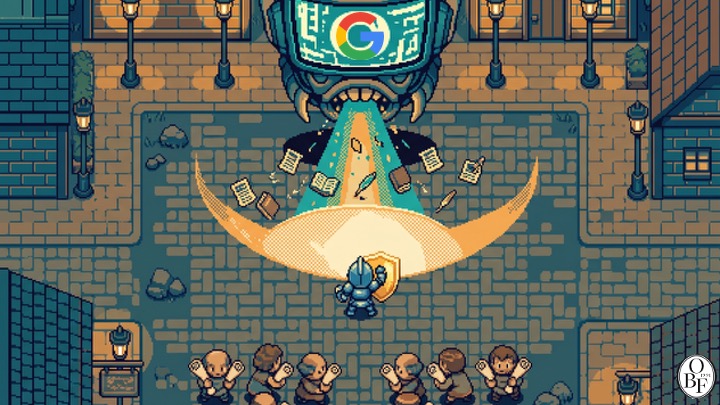
Google has already begun rolling out a new toggle in Search Console to some UK website owners, and plans to expand it globally after testing. In other words, this regulation starts in the UK but is likely to affect content creators worldwide.
Related issues
🔒 Same Company, 100x Bonus Gap: Korea's New Problem
Citizen dividends, a sovereign fund, solidarity wages—three rival fixes emerged in just three weeks.
🔒 Founders Banned, $2 Billion Meta-Manus Deal Unwound
The chip war's next battlefield: AI agents.
🔒 Why Anthropic Is Hiring a $320K Copywriter
AI can write, but only humans can figure out what to say.
Your take shapes the next issue
Reply with your experience or perspective — the best responses feed into future issues.
Sign in to commentAny registered reader can comment — it takes 10 seconds.